


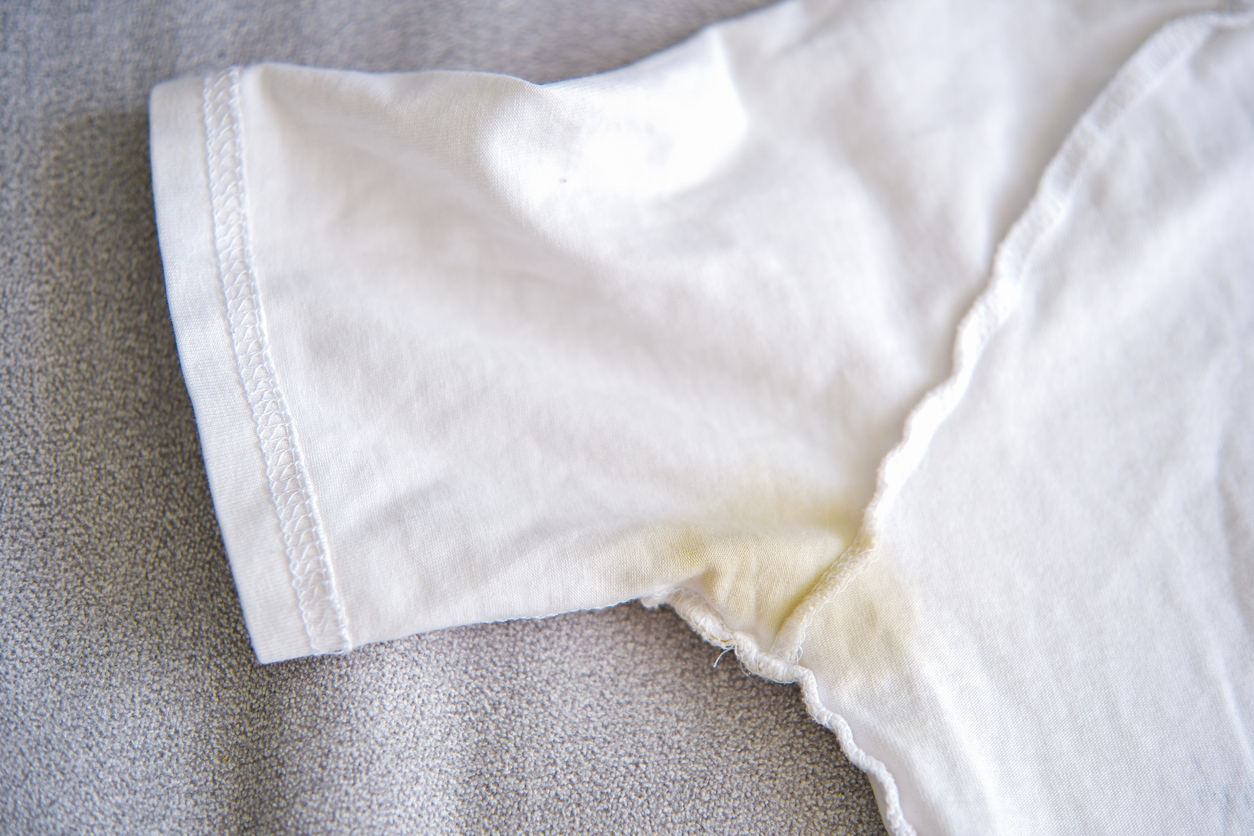
Yellow stains under the arms of a favorite shirt are one of the most common laundry complaints out there, and one of the most misunderstood. You may quietly assume they mean you are not clean enough, but the real cause is usually a reaction between sweat, body oils, antiperspirant, and fabric.
How to remove yellow underarm stains genuinely comes down to knowing which home methods actually reverse this kind of staining. Unfortunately, some methods genuinely reverse it, and others, chlorine bleach chief among them, lock it in for good. This guide covers what’s really happening under the arms of a shirt, the one home method with real evidence behind it, the popular fixes worth skipping entirely, and when a piece belongs in a professional’s hands.
What Yellow Underarm Stains Actually Are
Yellow-brown underarm stains do not come from sweat or dirt alone. They develop when aluminum compounds in antiperspirant react with proteins in your sweat. Each wear can leave more residue in the fabric, so the discoloration often becomes noticeable over time.
The Aluminum-Protein Reaction Home Washing Cannot Break
Most antiperspirants use aluminum chlorohydrate or aluminum zirconium to reduce sweating. When these ingredients mix with sweat proteins, they create a residue that bonds tightly to shirt fibers.
This buildup explains why normal washing often falls short:
- Water cannot dissolve the residue.
- Agitation cannot loosen the chemical bond.
- Regular detergent may remove surface oils but leave behind the yellowing.
- Repeated wear can push the residue deeper into the fabric.
One wear may not leave a visible mark. After 20 or 30 wears, however, the buildup can turn stiff, yellow, or brown.
To remove the stain, you need a treatment that helps break apart the aluminum-protein residue. The right method depends on the fabric, its color, and how long the stain has been there. Always check the care label before treating the garment.
Why Regular Laundering Doesn’t Touch This Stain
A standard wash cycle removes everyday soil and oil, but it may not break apart bonded aluminum-protein residue. Cold water often lacks the energy needed to loosen this buildup. Your detergent may clean the surrounding fabric while leaving behind much of the underarm stain.
Several factors can make the yellowing harder to remove:
- Cold water: protects many colors but does little to break down bonded residue.
- Standard detergent: may not contain the enzymes needed to target protein buildup.
- Dryer heat: can set any remaining residue deeper into the fibers.
- Repeated washing: cleans the shirt without necessarily treating the stain itself.
That is why yellow underarm marks can become darker or stiffer over time. Treat the stained area before washing, and avoid machine drying until you check the results.
The Home Method That Genuinely Works
An enzymatic pretreatment gives you a practical way to address yellow underarm stains before washing. Protease enzymes break down the protein-based residue regular detergent may leave behind. This method works best on newer stains, while older buildup may require several treatments or professional care.
The Enzymatic Pretreatment Sequence Step by Step
1) Read the care label.
Check the recommended water temperature and any cleaning restrictions before you begin.
2) Test the product.
Apply a small amount of enzyme-based stain remover to a hidden area, especially on dark, bright, or delicate fabrics.
3) Saturate the stain.
Apply the product directly to the entire yellowed area instead of treating only the edges.
4) Work it into the fibers.
Gently brush the area for 30 to 60 seconds with a soft-bristled brush or clean toothbrush.
5) Wait 30 minutes.
Give the enzymes enough time to loosen the protein residue. Follow the product label if it recommends a different treatment time.
6) Wash the garment.
Use your regular detergent and the warmest water allowed by the care label.
7) Inspect before drying.
Check the underarm area while the shirt or blouse remains wet. If yellowing remains, repeat the treatment instead of placing the garment into the dryer.
Older stains or stiff fabric may not clear completely at home. If two or three treatments produce little improvement, consider taking the garment to a professional cleaner.
What NOT to Do: The Attempts That Make It Permanent
A few popular fix attempts do real, lasting damage, and it’s worth naming them plainly rather than dancing around it.
- Chlorine bleach. This is the single most damaging thing you can do to a yellow underarm stain, and it deserves its own explanation below.
- Hot water without pretreatment. Heat sets protein residue before it’s been broken down, locking in the stain rather than lifting it out.
- Vinegar and baking soda together. This combination gets recommended for nearly every stain online, but it doesn’t meaningfully react with aluminum-protein residue. At best it does nothing. At worst it leaves a chalky film that traps more residue underneath it.
- Hairspray, WD-40, and similar internet hacks. These target ink and grease stains, not protein-based residue. They have no chemical relationship to what’s happening under the arm of a shirt, and using them just adds a second stain to clean up alongside the first.
Don’t Attempt To Fix Using Chlorine Bleach – Why Chlorine Bleach Turns Yellow Residue Permanently Yellow-Brown
Chlorine bleach can look like the obvious choice, especially when you find yellowing on a white shirt. However, it does not reliably dissolve the aluminum-protein buildup inside the fabric. It may react with that residue and create darker compounds that bond more tightly to the fibers.
This reaction can leave you with:
- A deeper yellow or brown discoloration.
- Weakened, rough, or stiff underarm fabric.
- A stain that resists later washing and pretreatment.
- Uneven light spots on colored garments.
If you already applied bleach, stop using it and rinse the garment according to its care instructions. You can test an enzyme-based treatment on a hidden area, but do not expect every bleach-darkened stain to disappear. When the color remains after careful treatment, ask a professional cleaner whether or not the garment can be safely improved.
Delicate Fabrics Where the Standard Method Needs Adjustment
The brush-and-hot-water sequence above works well on cotton and cotton-blend shirts, but it isn’t safe for everything. Silk blouses can be damaged by the mechanical action of brushing and by water temperatures that are perfectly fine for cotton. Wool blends can felt or shrink under those same conditions.
For fabrics like these, skip the home method rather than risk the piece. A professional cleaner can apply an equivalent enzyme treatment through solvent-based methods calibrated to the fabric, which gets the same result without the risk. This kind of dry cleaning work protects the fabric while still targeting the exact residue the home method addresses.
What a Professional Does Differently
A professional cleaner does more than place your shirt in a larger machine. They match the treatment to the fabric, stain type, and amount of buildup. This controlled approach may improve older stains while protecting your shirt or blouse from unnecessary damage.
A professional stain removal service may use:
- Stronger enzyme treatments to break down protein residue that has built up over time.
- Specialized solvents to remove oils mixed into the underarm stain.
- Controlled temperatures to reduce the risk of setting the remaining residue.
- Targeted hand-finishing to treat discoloration that remains after the main cleaning process.
Results still depend on the fabric, previous treatments, and age of the stain. Ask the cleaner to assess the garment before treatment.
Prevention: How to Stop Yellow Underarm Stains From Coming Back
Once a shirt is clean, a few habit changes make a real difference in how long it stays that way.
- Switch to an aluminum-free antiperspirant, or a deodorant without aluminum compounds, if underarm staining has been a recurring problem.
- Apply antiperspirant the night before rather than the morning of. It has time to bond with skin instead of fabric, so less transfers directly onto the shirt.
- Use dress shields on shirts and blouses you wear often, especially for fabrics such as silk where the enzyme method won’t be an option later.
- Send heavily worn pieces for professional cleaning periodically, before residue has months to accumulate. Catching it early is a lot easier than catching it late.
Home Remedies Failed? Take It to Tres Bon Dry Cleaners
If a shirt or blouse in your closet has yellowing that’s gone past a home fix, or that already met an attempted fix through bleaching, that’s exactly what we handle at Tres Bon Dry Cleaners in Albertson,, New York. We honestly assess every piece before any work begins, including which items are strong candidates for our enzyme pretreatment and dry cleaning process. We will also let you know if any garments have damage that’s simply not reversible.
Call Tres Bon Dry Cleaners and describe the stain, its age, and anything you have tried at home to receive clear guidance on the next step.
Contact Tres Bon Dry Cleaners:
Address: 1085 Willis Ave., Albertson, NY, 11507
Phone: +1 (516) 963-0988
Email: contact@tresbondrycleaners.com
Service Area: Roslyn, Roslyn Heights, and surrounding communities
Convenience: FREE home Pickup and Delivery Service twice each week