


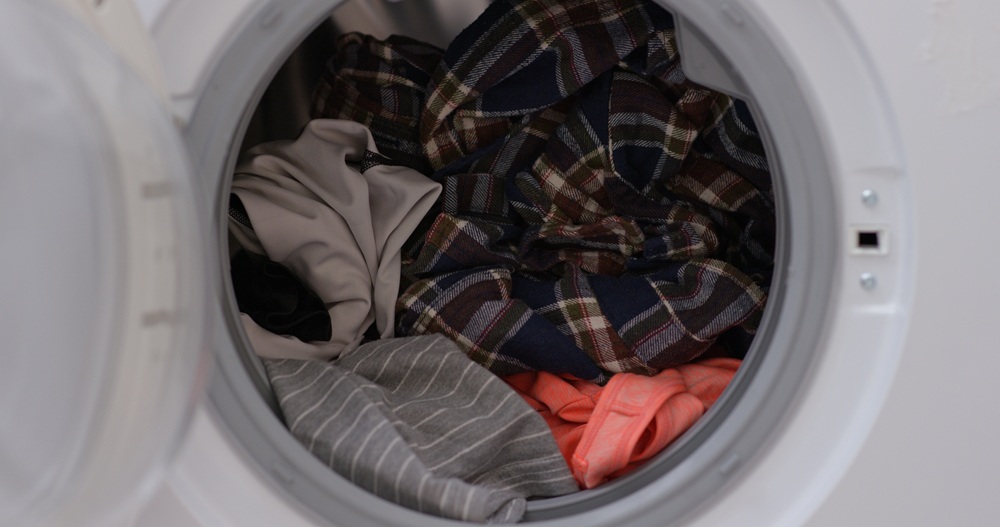
You probably did it without thinking. A silk top goes in with the colors. A wool sweater gets tossed in a cool setting because “it will be fine.” Three minutes of heated agitation later, something that fit perfectly now fits differently in all the wrong ways. The washing machine did nothing wrong. It just did exactly what it was built to do – tumble, heat, spin – and that happens to be precisely what destroys a wide range of common fabrics.
The problem is that most clothing care mistakes are not apparent until it is already too late. Fabrics such as silk, cashmere, and rayon quietly shrink, pill, lose their drape, or dull down permanently after a single cycle.
Before you sort another load, here are the fabrics at particular risk, how to read what your care label tells you, and a practical test to decide when to hand anything over to a professional.
The Fabrics Most Commonly Ruined in the Wash
These are the fabrics that end up in washing machines most often and come out worse. If any of these are in your wardrobe, the care label deserves more than a glance.
| Fabric | What the Machine Actually Does to It |
|---|---|
| Silk | Loses its sheen, develops water spots, and warps at the weave level. The luster does not come back. |
| Wool and merino | Felts and shrinks rapidly under agitation and heat. Even a short cool cycle at the wrong temperature locks the fibers together for good. |
| Cashmere | Pills aggressively, stretches out of shape, and loses the softness that made it worth buying in the first place. |
| Linen (structured or tailored) | Distorts shape, creases set permanently, loses any structure it had. |
| Rayon and viscose | Shrinks dramatically and loses its drape. A flowing dress becomes a stiff, shapeless version of itself after one wash. |
| Velvet | Pile crushes and mats under agitation, texture permanently becomes flat and uneven. |
These are among the most commonly worn fabrics in everyday and professional wardrobes, and they are also the fabrics to dry clean rather than run through a standard cycle. The damage is not always dramatic on the first wash. Sometimes it builds. But it does not reverse.
These Garment Types Need Extra Caution, Too
Fabric content is only part of the risk. Some garments are machine-wash dangers regardless of what they are made from, because of how they are built. Construction matters just as much as fiber when it comes to what not to machine wash.
- Structured blazers and suit jackets have internal canvas, padding, and lining that shrink and warp at different rates from the outer shell. The jacket can come back with a bubbled front, distorted shoulders, and a silhouette that cannot be pressed back into its original shape.
- Heavily lined coats and trench coats face a similar problem. The lining and outer fabric respond to water differently. After a machine wash, linings separate, bubble, and pull in ways that make the coat unwearable regardless of how the exterior looks.
- Embellished or beaded garments are destroyed by agitation. The mechanical movement of the drum snaps threads, breaks adhesive bonds, and pulls beads and sequins away from the fabric. What went in embellished comes out stripped.
- Pleated trousers and tailored dresses lose their press lines permanently in the wash. The pleats that gave the garment its shape collapse and cannot be restored with a home iron, regardless of the temperature or the time spent pressing.
- Garments with boning, underwire, or structured panels are at risk of the structure warping, bending, or breaking entirely under machine agitation. The outer fabric may survive. The internal construction often does not.
How to Actually Tell If Something Is Machine Safe
The guesswork is unnecessary. Three checkpoints cover most situations.
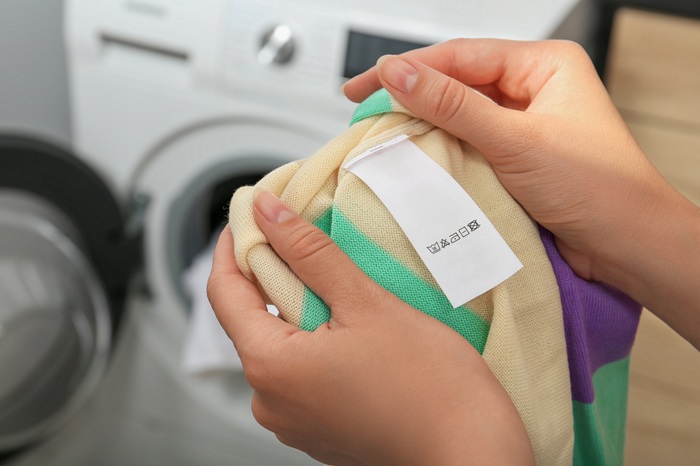
1. Read the care label.
A tub symbol with a hand inside means hand wash only. A tub with an X through it means do not wash with water at home under any circumstances. A circle means dry clean. If you see either of the last two, the machine is not an option.
2. Check the fabric content tag.
If the tag lists silk, wool, cashmere, rayon, or viscose in any meaningful percentage, treat the garment with caution regardless of what the wash symbol appears to permit. These fibers are vulnerable even on gentle cycles.
3. When uncertain, default to professional care.
Anything expensive, structured, embellished, or genuinely irreplaceable does not belong in a machine as a test. The machine will tell you the answer, but you will not be able to undo it.
The Cost of Getting It Wrong and the Easy Alternative
Before the wash cycle: A cashmere sweater worth $200. A wool coat you’ve had for three winters. A blazer that finally fits the way you want it. Pieces you reach for without thinking because they work.
After: A sweater two sizes smaller. Felted wool that won’t recover. A blazer with a lining that bubbled and separated. None of it fixable. All of it is preventable.
The real cost of getting it wrong isn’t just the replacement price. It’s the piece that fit perfectly, the coat you finally broke in, the garment you wore to every occasion that mattered. Some things aren’t replaceable even when the money is available.
The easy alternative: Professional dry cleaning for any of these garments typically costs a fraction of what the piece is worth. It’s not a luxury reserved for formalwear.
If you stand in front of something and genuinely are not sure whether or not it’s machine safe, that uncertainty is reason enough to take it to Tres Bon Dry Cleaners before finding out the hard way. We handle the fabrics and constructions covered in this guide every day. Bring in anything you’re second-guessing.
Take Your Delicate Pieces to Tres Bon Dry Cleaners Before the Machine Gets to Them
Professional dry cleaning is not a luxury. It is basic garment protection, the same logic as not putting leather shoes into the dishwasher. If a piece of clothing gives you second thoughts, skip the guesswork and take it to Tres Bon Dry Cleaners first.
We see the aftermath of a single wrong wash every week: shrinkage that cannot be reversed, fiber breakdown that changes how a garment feels, shape loss no iron can fix. All of it is preventable. We will assess the fabric, handle it correctly, and return it looking exactly as it should – because the cost of dry cleaning is always less than the cost of replacing something you loved.
Free Home Pickup and Delivery Service: Put your laundry bag outside your front door and everything comes back clean, fresh, and folded. You do not need to be home when we arrive. Manage everything through our Mobile App, 24 hours a day. Signing up takes 30 seconds and could save you 43 to 105 hours a year.
Tres Bon Dry Cleaners:
📍 1085 Willis Ave., Albertson, NY, 11507
📧 contact@tresbondrycleaners.com
🗓 Sign Up Online: https://www.tresbondrycleaners.com/service/free-pickup-delivery/#sign_up
Frequently Asked Questions
Which fabrics should never go into the washing machine?
Silk, wool, cashmere, rayon, viscose, and velvet are the most commonly damaged fabrics in machine washing. Each has a specific failure mode: silk loses its sheen and warps, wool felts and shrinks, cashmere pills and stretches, rayon shrinks dramatically, and velvet crushes permanently. Any garment containing a significant percentage of these fibers should be treated with caution regardless of the wash cycle used.
Can a gentle cycle protect delicate fabrics in the machine?
For some fabrics, a gentle cycle reduces the risk. For silk, wool, cashmere, and rayon, it reduces but does not eliminate it. Heat and agitation are still present on a gentle cycle, and these fibers are vulnerable to both. The only genuinely safe option for these materials is hand washing in cool water or professional dry cleaning.
How do I know if my garment needs dry cleaning?
Check the care label for a circle symbol, which means dry clean. Also check the fabric content tag. If the garment contains silk, wool, cashmere, rayon, or viscose, or if it has structured internal construction, embellishments, or tailoring, professional care is the safer default. When the label is missing or unclear, take the garment to a professional for assessment rather than testing it in the machine.
What happens if I accidentally machine wash a dry clean only garment?
It depends on the fabric and the cycle. Wool and cashmere can felt and shrink significantly even after one wash. Silk may develop permanent water spots or lose its drape. Structured garments may have lining or padding that separates internally. Some damage is partially recoverable with professional treatment if addressed quickly. Most are not fully reversible.
Is dry cleaning worth it for everyday garments?
For garments made from vulnerable fabrics or with structured construction, yes. The cost of dry cleaning is consistently lower than the cost of replacing a garment that was damaged by the wrong cleaning method. For frequently worn investment pieces such as suits, wool coats, and silk blouses, regular professional cleaning also significantly extends the lifespan of the garment.